TGCT Support
  • Home
  • About TGCT
    • Causes of TGCT
    • Types of TGCT
    • Tumor Location
    • TGCT in Pediatrics
    • Diagnosis >
      • Biopsy
      • Imaging Features
  • Treatment
    • Surgery >
      • Surgery Guide
      • Recovery
    • Medications >
      • Turalio >
        • Recommended Dosing
      • Romvimza
      • Imatinib
      • Common Side Effect of TGCT Drugs
    • Clinical Trials >
      • AMB-05X
      • Pimicotinib
      • Emactuzumab
      • Cabiralizumab
      • Lacnotuzumab
    • Radiation
  • Get Support
    • Join the Community >
      • Volunteer
      • Support Groups
    • TGCT Specialists
    • Consensus Guideline
    • Our Research
    • Nutrition >
      • TGCT Cookbook
    • Pain Management
    • Mental Health >
      • Find Mental Health Help
    • Glossary of Terms
    • Educational Materials & Videos >
      • Physical Therapy
    • Webinars
    • FAQs
  • About Us
    • Meet the Team
    • Medical Advisory Board
    • Partners >
      • TGCT Support France
    • Contact Us
    • Our Store
  • News
    • Events
    • Patient Stories
  • DONATE
    • GEM Program
  • Home
  • About TGCT
    • Causes of TGCT
    • Types of TGCT
    • Tumor Location
    • TGCT in Pediatrics
    • Diagnosis >
      • Biopsy
      • Imaging Features
  • Treatment
    • Surgery >
      • Surgery Guide
      • Recovery
    • Medications >
      • Turalio >
        • Recommended Dosing
      • Romvimza
      • Imatinib
      • Common Side Effect of TGCT Drugs
    • Clinical Trials >
      • AMB-05X
      • Pimicotinib
      • Emactuzumab
      • Cabiralizumab
      • Lacnotuzumab
    • Radiation
  • Get Support
    • Join the Community >
      • Volunteer
      • Support Groups
    • TGCT Specialists
    • Consensus Guideline
    • Our Research
    • Nutrition >
      • TGCT Cookbook
    • Pain Management
    • Mental Health >
      • Find Mental Health Help
    • Glossary of Terms
    • Educational Materials & Videos >
      • Physical Therapy
    • Webinars
    • FAQs
  • About Us
    • Meet the Team
    • Medical Advisory Board
    • Partners >
      • TGCT Support France
    • Contact Us
    • Our Store
  • News
    • Events
    • Patient Stories
  • DONATE
    • GEM Program

Turalio (pexidartinib)

Note: Approved medications have two names, a generic (or chemical) name and a brand name associated with the drug company that manufactures it. The generic or chemical name describes the drug itself while the brand name is intended to be catchy and make the drug more familiar. TURALIO is a brand name for the drug Pexidartinib. These names are used synonymously and refer to the same medication.  

Turalio (Pexidartinib)

TURALIO (chemical name pexidartinib) was approved in 2019 as a treatment for recurrent and inoperable tenosynovial giant cell tumor (TGCT) in the United States. Specifically, it was approved for symptomatic TGCT patients associated with severe morbidity (unmanageable symptoms) and functional limitations where surgery would be extremely difficult or the risk, risk of recurrence or risk of complications associated with surgery is higher than the potential benefit (1). This medication is only available in the United States under a FDA Risk Evaluation and Mitigation Strategy (REMS) Program to reduce the severity and frequency of liver related side effects. 

How does It work?

Picture
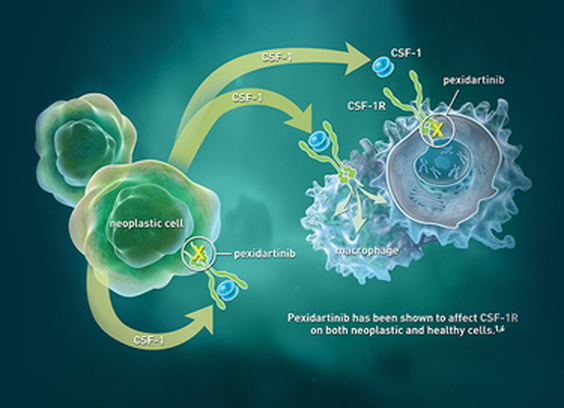
Pexidartinib (Brand name TURALIO) works by inhibiting CSF1 from signaling to TGCT and the surrounding cells. This disrupts the ability for the TGCT to recruit more cells, shrinking the tumor and halting the growth (2). Recently, it has been discovered that Pexidartinib and other CSF1 inhibitors blocks CSF1 at the cell source and target the surrounding immune cells that are recruited (3). By blocking the tumor cells ability to communicate with the joint environment, the tumor shrinks and other associated symptoms such as pain and swelling are decreased (4,5).
It is reported that patients' pain and symptoms continue to improve even after years of taking it.

Plain Language Summary of Original Trial

How do I talk to my doctor about turalio?

TURALIO is part of a REMS program, meaning only certain providers can prescribe it. Consult with your oncologist or healthcare provider about TURALIO and their REMS program. Healthcare providers who are part of the REMS program who can prescribe TURALIO can be found here.

Looking for support and others receiving this medication?

Join the Turalio Patient Support Group
This group is for patients and caretakers only.

Turalio in pediatrics

TURALIO (pexidartinib) was approved for symptomatic TGCT in adult patients. However, pediatric patients with TGCT have a similar course as adult patients and there is an unmet need for tailored therapies specific for pediatrics. To address this, a study is being conducted by the National Cancer Institute to understand the tolerability and side effects of TURALIO in patients 3 years of age and older. To join, a patient must have tissue-confirmed TGCT and have healthy organ function. Enrolled patients would receive TURALIO through NCI and have NCI center visits every 2 months in early stages of the study. 

Check out more below or contact Study contacts Jessica Lakes ([email protected]) or Elaine Thomas ([email protected]):
Learn more about NCI's Pediatric TGCT study

Long term hepatotoxicity risk of turalio

To evaluate and understand the long-term risk of hepatic failure with TURALIO™ (pexidartinib) and the mechanism of liver injury based upon liver biopsy information, a study is being conducted among patients who received or are receiving TURALIO and experience hepatotoxicity. Participants will be followed for 10-years to understand the long-term risks associated with TURALIO. If you are interested in your experience being used for research, talk to your doctor and check out the information below.
Clinical Trial Information
Ⓒ TGCT Support
Updated 2025

TGCT SUPPORT IS A PROGRAM OF THE LIFE RAFT GROUP

Picture
155 US Highway 46, Suite 202                      Wayne, NJ 07470                      [email protected]