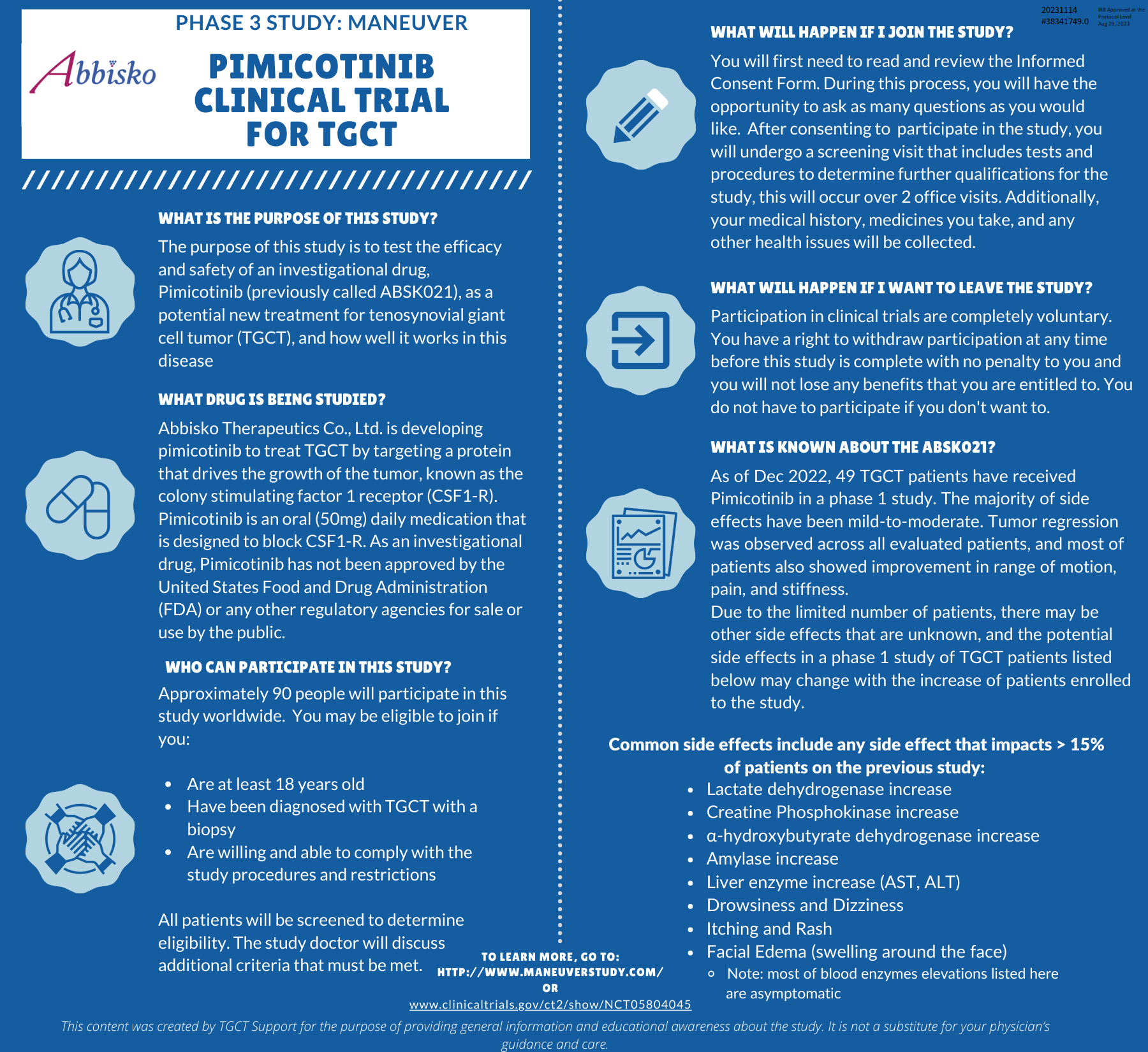
Abbisko Therapeutics Co., Ltd. is developing pimicotinib (previously known as ABSK-021) to treat TGCT by targeting a protein that drives the growth of the tumor, known as the colony stimulating factor 1 (CSF1). pimicotinib is an oral (50mg) daily medication that is designed to block CSF1 at the cell source. As an investigational drug, pimicotinib has not been approved by the United States Food and Drug Administration (FDA) or any other regulatory agencies for sale or use by the public.
The purpose of their current Phase 3 study, known as MANEUVER, is to test the effectiveness and long-term safety of an investigational drug, pimicotinib, as a potential new treatment for TGCT.
As of December 2022, 49 Chinese TGCT patients have received pimicotinib at two doses (25 mg and 50 mg). Majority of side effects have been mild-to-moderate. At 6 months of treatment, TGCT patients showed improvement in range of motion, pain, and stiffness. According to their 2023 poster at the American Society of Clinical Oncology (ASCO) conference, 77.4% of patients with TGCT had more than 30% shrinkage (7% having undetectable disease from those that received 50 mg for 6 months) (1). Sixty percent to sixty-seven percent of TGCT patients reported improvements in pain according to the BPI-30 scale. The potential side effects listed below may change with the increase of patients enrolled to the study.
Currently, side effects include increased lab values (CK, liver enzymes like AST/ALT, LDH, and alpha-HBDH), as well as rash, facial swelling, dizziness, hypertension, itchiness, among others.
Their Phase 3 trial has closed recruitment. Patients not eligible for the Phase 3 may be enrolled in Phase 1, especially those that have been on other medicines for TGCT. Patients enrolled in the Phase 3 study will be randomized to receive a placebo (look alike sugar pill) or pimicotinib for 6 months. Patients will not know whether they received the placebo or the drug. After 6 months, patients will allowed onto the drug regardless of whether they were on the placebo or on the study drug in the first part. Patients who received the drug during the first 6 months will be allowed to continue on the drug. The goal of this study is to determine if pimicotinib is safe and effective.